








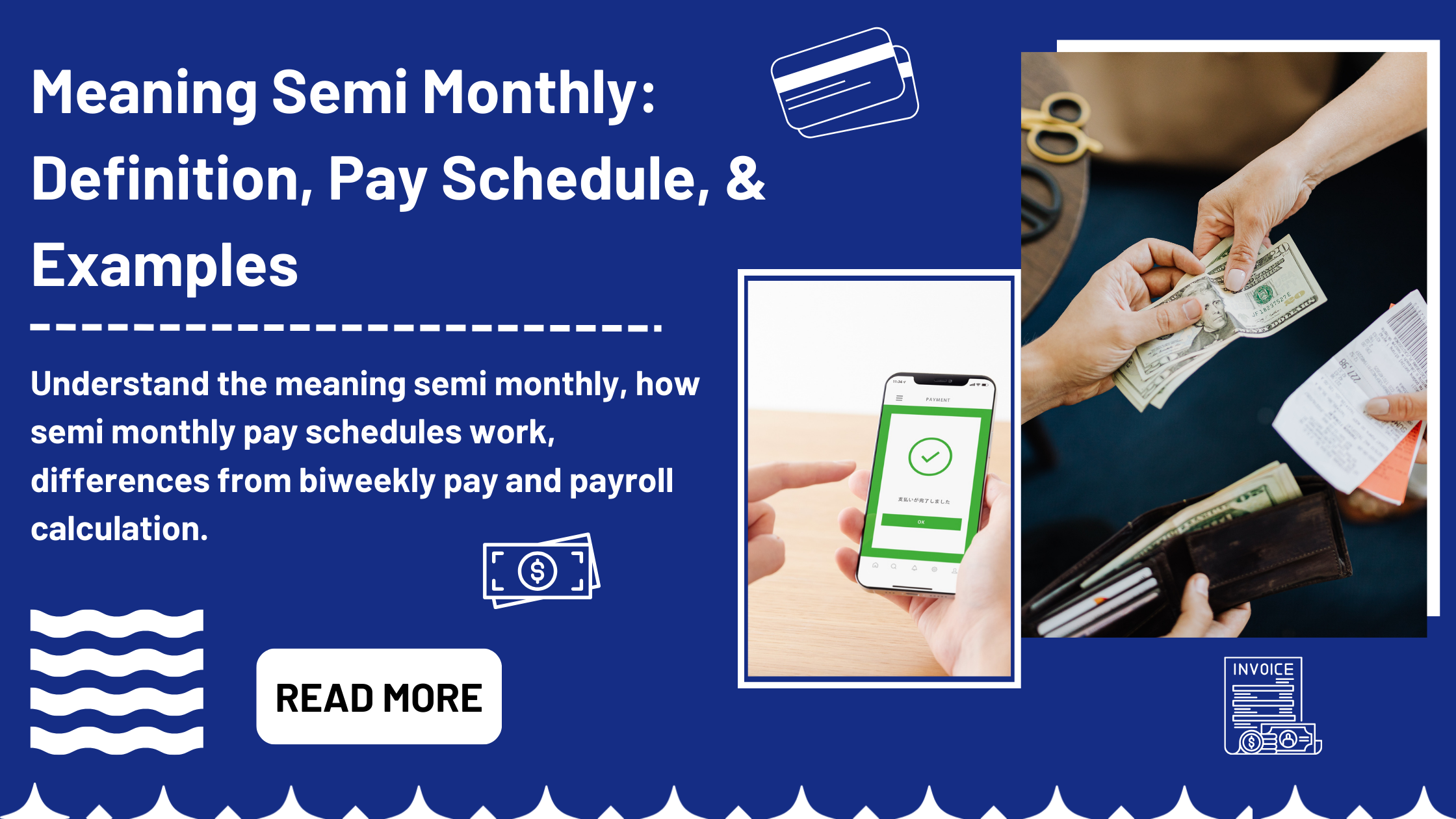
The meaning semi monthly plan is a salary scheme in which employees receive wages once a year after every two months on specified days of year which are predetermined. The result of this construction is 24 pay periods per year and this has proven to be a payroll system much used in businesses that desire to have an established salary allocation where better management of funds is realized. Semimonthly pay is calendar-linked as compared to weekly or monthly payroll schemes which have schemes that take the number of weeks of months. This ensures continuity in date of payment, any number of working days within every pay period is possible. It explains the entire definition of semi-monthly pay, its working, its calculation of a payroll, its benefits, its limits, its use in the business and its trend in the payrolls.
Experience With An Idea Of Semi-Monthly Compensation
Half-monthly or once a month is known as semi-monthly. In payroll, the segregation of the sales made in the monthly salary into two separate payments is the case.
Ventured semi-monthly payroll plans are:
• Payment on the 1st and 15th.
• 15 th and end of month payment.
• Pre-established fixed-date company payrolls.
The majority of employees on a syllar income are usually put on this program because they can not have a fluctuating salary depending on the period.
The Semi-Monthly Payroll Process
The semi-monthly pay is where each calendar month is divided into two pay periods.
Garbo payroll division buyers:
• First pay period → From 1st to 15th
• 2 nd pay period: 16 th up to the end of the month.
The paid employees at these times are given on a wage earned basis. The number of days on work during the period can however vary due to the presence of holidays, weekends or disparity in the number of months. It can make it difficult to consider the elements of payroll analysis among the hourly employees due to such unpredictability.
Monthly Schedule Of The Number Of Paychecks (Semi-Monthly)
Those employees who earn on semi-monthly basis are paid:
• 2 paychecks per month
• 24 paychecks per year
This will be in contrast to the biweekly schedules that form 26 paychecks annually because of 52-week calendar cycle.
Biannual Calculation Payroll System Semi-Monthly
The amount of payroll that will be calculated based on this schedule depends on the nature of employment.
For Salaried Employees
The yearly wage will be incorporated into 24 equal payments.
Example logic:
Annual salary/24= semi-monthly paycheck.
This will ensure that income is evenly distributed.
For Hourly Employees
Payroll must account for:
Number of coinciding pay hours per pay period
• Overtime calculations
• Holiday pay adjustments
• Variable shift schedules
This contributes to a payroll administrative complex.
Working Hours Semi Monthly Rate
The mean pay one is semi-monthly and includes:
Full time employees are in the range of between 86 and 88 working hours.
Second variance due to calendar institution In a less office-based (or office-based) system there can be an oscillation and on some systems July Pauline Epiphan will actually count twice (or occasionally three or more times).
Holiday and weekend differences regarding workweek policies in the company.
The physical working hours every pay period do not always equate to actual working hours since the volume of months in which the pay period occurs is different. The factors behind the decision to use semi-monthly payroll are known. The semi-monthly business payment is present based on various reasons that run the business. Key motivations include:
• Liaison with monthly accounting.
• Smaller pay budgeting and forecasting.
• Annual benefit and tax deduction which is of constant nature.
• Process low payroll frequency as compared to weekly system.
• Much improved financial forecasting to HR departments.
The specified structure is even more widespread in professional and administrative spheres and the corporate world.
The Advantages Of Semi-Monthly Pay
The semi monthlypayroll system has a lot of benefits on various levels.
• Assured incomes among the workers.
• More convenient distribution of expenses and monthly bills.
• Efficient employer payroll budget.
• Reduced expense of payroll processing.
•There is a deduction of tax benefits and taxes management.
• Greater stability as compared to financial planning.
These advantages make it one of the choices to the majority of organizations.
Unfavorable Characteristics Of Semi-Monthly Pay
Semi-monthly pay has certain drawbacks despite the fact that it has its advantages.
•Various number of working days during a pay time.
• Hourly employees: complex calculation of overtime.
• Prolonged waiting more than weekly salary.
• Hallways are experienced during holidays.
• No extra payments like every-two-week shifts.
The organization must put these factors into consideration when determining the payroll frequency.
Semi Monthly Compensation In Industries
The scale of payroll that is commonly used in is:
• Business and office jobs.
• Industries Government and administration.
• Healthcare management employment.
• Educational institutions
The reason behind this is that employers have semi-monthly payment systems that are practiced in industries that have a stable wage system as it is predictable.
Semi Monthly And Monthly Payroll
Other entities compare semi-monthly to monthly compensation system. Semi monthly benefits have the advantage over monthly benefits:
• In addition to this, more regular distribution of income.
• enhanced economic security of the employees.
• Easier financial burden between compensation periods.
• increase human resources satisfaction.
Payroll monthly may be more easy to administer but not good to employees.
Payroll Planning Future Strategies
The payroll systems continue to fluctuate with the changes in technology and labor.
Emerging trends include:
• On-demand pay systems
• Artificial intelligence payroll.
• Automatic schedules of compensations.
• Digital payroll platforms
• Global employee compensation plans.
Semi-monthly pay is also still possible, but hybrid versions of payroll are gaining popularity in the organizations.
FAQ
How many paychecks do we make each year?
The is a 24-paychecks-a-year system on which the workers receive payments.
Is semi monthly pay better than biweekly pay?
It is founded on the demand and the taste of the people working in an organization.
Who is paid twice every month?
Corporate or administrative people, and largely salary-minded.
Will semi-monthly variable be tax deductible?
No, there is no tax of frequency of payroll, but frequency of total income.
Conclusion
Semi-monthly pay is a progressive pay structure that strives to provide efficiency in the organization and stabilization of the employees in regard to finances. Its twice a month payment of income also simplifies the budgeting and harmonises the payroll and the monthly accounting. It may create challenges in computing the hourly wages and adjusting the number of working days but because of its predictability and effectiveness in the administration of the payrolls, it is a common payroll system that is currently used. Semi-monthly schedules remain among the foundations of modern compensation plans since payroll technology continues to evolve.